We understand the ever changing needs of our customers

we provide a high level of service dedicated to fulfilling all your shipping requirements

Watch Video
Road Freight

Keep all your data in one place which can be accessed from anywhere and anyplace

Let us help you 24/7 manage your supply chain needs

Back to Global Coverage

Qatar Freight Forwarding Services
Air & Sea Freight Between Qatar and the UK

Intercargo provides reliable freight forwarding services between Qatar and the United Kingdom, helping businesses import and export cargo efficiently by air and sea.

Whether you are importing goods from Qatar into the UK, exporting products from the UK to Qatar, or managing regular international shipments, our experienced freight forwarding team provides complete end-to-end logistics solutions. From collection and customs clearance to final delivery, we manage every stage of the shipment process.
Logistics solutions
Air Freight Qatar to UK
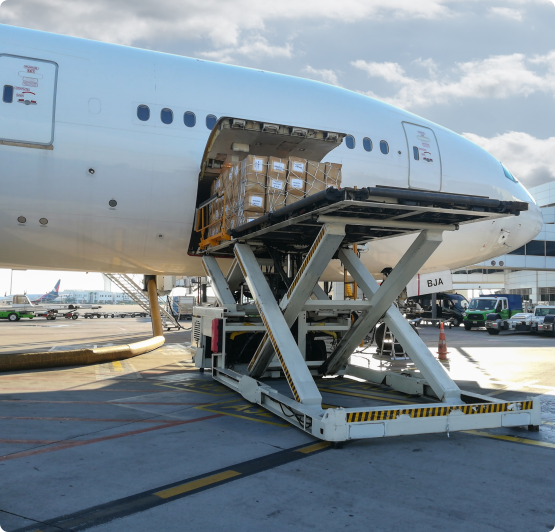
When speed matters, our Qatar air freight services provide fast, secure and reliable transportation between Qatar and the United Kingdom.
We arrange air freight through Hamad International Airport (DOH) in Doha, with UK arrivals through London Heathrow, London Stansted, Manchester Airport, Birmingham Airport and East Midlands Airport.
Our air freight solutions include:

  • Air freight from Qatar to the UK
  • Express and economy air cargo
  • Door to door delivery
  • Time critical shipments
  • Air freight from the UK to Qatar
  • Airport to airport services
  • Customs clearance support
  • High value and commercial cargo

Whether you need urgent delivery of industrial equipment, aviation components, electronics, retail stock or commercial goods, our air freight specialists can provide the most efficient solution.
Logistics solutions
Sea Freight Qatar to UK
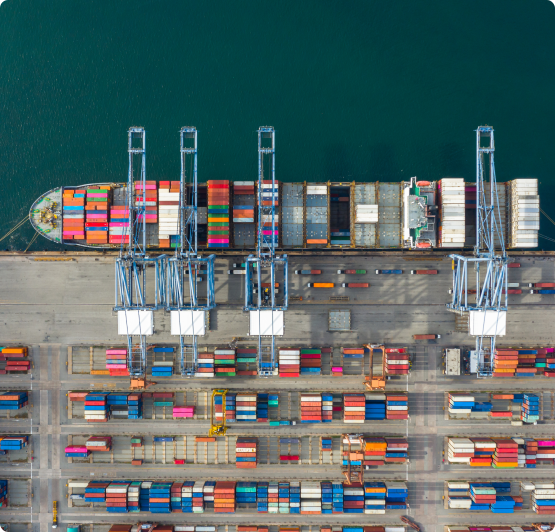
For larger shipments and cost-effective transportation, our sea freight services provide dependable shipping solutions between Qatar and the UK.
We regularly arrange cargo movements through Hamad Port, with UK arrivals through Port of Felixstowe, Southampton, London Gateway, Liverpool, Tilbury and Immingham.
Our sea freight solutions include:

  • Full Container Load (FCL)
  • Port to port shipping
  • Customs documentation
  • Project cargo
  • Less than Container Load (LCL)
  • Door to door logistics
  • Cargo insurance
  • Oversized and heavy lift shipments

Whether shipping machinery, construction materials, commercial products, manufacturing equipment or retail stock, we can tailor a sea freight solution to suit your budget and transit requirements.
Logistics solutions
Import from Qatar to the UK
Intercargo helps UK businesses import products and cargo from Qatar through a fully managed freight forwarding service.
Our import services include:

  • Supplier coordination
  • Air and sea freight transportation
  • Duty and VAT guidance
  • Final delivery throughout the UK
  • Collection from Qatari factories, warehouses and commercial premises
  • UK customs clearance
  • Warehousing and distribution

We regularly support imports including:

  • Petrochemical products
  • Machinery
  • Commercial goods
  • Plastics and polymers
  • Aluminium products
  • Industrial equipment
  • Manufacturing components
Our experienced team ensures your cargo moves efficiently from Qatar to the UK while remaining compliant with all customs and import requirements.
Logistics solutions
Export from the UK to Australia
We also help UK businesses export goods to customers, distributors and partners throughout Qatar. Whether shipping to Doha, Al Rayyan, Al Wakrah, Lusail, Mesaieed or other commercial and industrial locations across Qatar, our export specialists can arrange a seamless freight solution by air or sea.
Our export services include:

  • Air freight exports
  • Export documentation
  • Cargo insurance
  • Commercial and industrial shipments
  • Sea freight exports
  • Customs compliance
  • Door-to-door delivery

From single shipments to regular freight movements, we provide scalable logistics solutions designed around your business requirements.
Logistics solutions
Customs Clearance & Freight Forwarding
Successful international shipping depends on accurate customs documentation and compliance. Intercargo provides:

  • Import customs clearance
  • Commodity code guidance
  • Duty and tax assistance
  • End-to-end shipment visibility
  • Export customs clearance
  • Shipping documentation
  • Freight forwarding management

Our experienced freight forwarding team helps minimise delays and keeps your cargo moving smoothly between Qatar and the United Kingdom.
Logistics solutions
Why Choose Intercargo for Qatar Freight?
We support importers, exporters, manufacturers, distributors, retailers and e-commerce businesses moving cargo between Qatar and the UK.
Air Freight And Sea Freight Specialists
Uk And Qatar Trade Lane Expertise
Import And Export Solutions
Customs Clearance Support
Door To Door Logistics
Dedicated Account Management
Global Carrier Network
Competitive Freight Rates
Get a Qatar Freight Quote

Looking for air freight from Qatar to the UK, sea freight from Qatar to the UK, or export services from the UK to Qatar? Contact Intercargo today for a tailored freight forwarding quotation and expert advice on the most efficient shipping solution for your cargo.
Logistics solutions
Latest News & Updates

Ceva Logistics - 'no stone will be left unturned'

Right ahead of CMA CGM Group's third-quarter (Q3 26) results disclosed on Friday (13 November), market talk on the logistics side of things had been all about how difficult a quarter Ceva Logistics would have faced. Up to the point where - despite the official denial from new CEO Patrick Moebel when he took over, that Ceva CFO Dorin-Blanchard would soon be out - a couple of names concerning possible replacements in the finance department have been doing the rounds in ...

Source: theloadstar.com

Read more

IATA urged to revise DAWB framework over forwarder liability concerns

The Airforwarders Association (AfA) and the National Customs Brokers & Forwarders Association of America (NCBFAA) have published a joint white paper calling on IATA to amend its Direct Air Waybill (DAWB) framework, warning freight forwarders could face significant new legal and insurance liabilities for risks outside their control. The revised DAWB framework, which came into effect on 1 July, could make a forwarder acting for a disclosed shipper subject to obligations that would normally apply when it ships in its own name if no separate bilateral agreement with the airline is in place, potentially including liability linked to cargo misdeclarations, concealed dangerous goods, and packaging failures, stressed the AfA and the NCBFAA in the whitepaper. "Freight forwarders should not be expected to assume liability for cargo they neither own, pack, nor control," said Steve Smith, AfA chief executive. "The revised framework risks shifting responsibility away from the party creating and controlling the risk and onto an intermediary whose role has not fundamentally changed, with serious potential legal, operational, and insurance consequences." The AfA and the NCBFAA are advising members to obtain written confirmation from each airline on which contractual framework will apply before tendering cargo, and to consult their insurers to determine whether their existing liability policies remain appropriate. "Freight forwarders should be liable for the risks they control, not for mistakes made by the shipper," said Donna Mullins, air freight sub-committee chair, NCBFAA. "The revised rules blur that line, and IATA needs to address it." The International Forwarders and Customs Brokers Association of Australia (IFCBAA) also contributed to the whitepaper. "The concerns arising from the revised Direct Air Waybill framework are shared across jurisdictions," said Simone Peacock, chief executive, IFCBAA. "The changes create material legal, operational and insurance uncertainty and have the potential to transfer significant and potentially uninsurable risks to freight forwarding businesses that may have no practical ability to verify, prevent or control the underlying conduct. "IFCBAA stands with NCBFAA and AfA in seeking a fair, clear and commercially workable framework that aligns liability with responsibility, knowledge and operational control." Further, the Canadian International Freight Forwarders Association (CIFFA) has also expressed its support for AfA and NCBFAA's joint paper. "CIFFA strongly supports the position advanced by the National Customs Brokers & Forwarders Association of America (NCBFAA) and the Airforwarders Association (AfA)," said Bruce Rodgers, executive director, CIFFA. "Liability within the air cargo supply chain must remain aligned with the roles, responsibilities, and degree of control exercised by each party. "The IATA DAWB amendments, which came into force on July 1, 2026, explicitly transfer shipper-related obligations and liabilities to freight forwarders acting as intermediaries, undermining long-established international liability principles and creating significant legal, operational, and insurance risks across the global air cargo supply chain." The associations also warn that implementation may differ between airlines, creating further uncertainty for forwarders operating across multiple carrier networks. The whitepaper opposes the revised DAWB framework and calls for liability to remain aligned with the roles and responsibilities of each party in the air cargo supply chain. The AfA and NCBFAA will send the whitepaper directly to airlines and are calling on IATA and carriers to establish a clear and consistent framework that does not transfer risks controlled by shippers to freight forwarders acting as intermediaries. In July, the AfA advised freight forwarders to confirm contractual arrangements with every airline and review insurance cover as the revised IATA DAWB framework came into effect. Global freight forwarder association FIATA and digital cargo insurance provider Breeze had also expressed concern over the new rules at the time.

Source: aircargonews.net

Read more

Gemini carriers target complete return to Suez transits by mid-January

Gemini Cooperation partners Maersk and Hapag-Lloyd will have made a full resumption of Suez transits on their Asia-Europe services by mid-January. Yesterday, the partners outlined the schedule for the last three Asia-North Europe services still detouring via the Cape of Good Hope to return to the Red Sea routing. The Asia-Northern Europe Loop 1 (Maersk AE2/Hapag-Lloyd NE1) will resume Suez transits in both directions with the departure of the 18,300 teu Mary Maersk from Ningbo on 4 December. Currently the vessel is returning to Asia having just completed a southbound Suez transit, according to AIS data. The new pro forma port rotation will be Ningbo-Shanghai-Tanjung Pelepas-Suez Canal-Rotterdam-Wilhelmshaven-Bremerhaven-Rotterdam-Suez Canal-Salalah-Singapore-Ningbo, while according to Xeneta's eeSea liner database, the switch in routing will see the number of ships on the string reduced from 14 to 13. The Asia-Northern Europe Loop 3 (Maersk AE3/Hapag-Lloyd NE3) will also fully resume westbound Suez transits following the departure of the 16,300 teu Alette Maersk from Shanghai on 20 December. That switch will see the number of ships deployed reduced from 13 to 11, and feature the following port rotation: Shanghai-Yantian-Tanjung Pelepas-Suez Canal-London-Gothenburg-Aarhus-Rotterdam-Southampton-Suez Canal-Singapore-Shanghai. Meanwhile, shippers on the Asia-Northern Europe Loop 2 (Maersk AE1/Hapag-Lloyd NE2), operated entirely by Hagag-Lloyd vessels, will have to wait until early 2027, with a full westbound resumption beginning with the departure of the 23,700 teu Damietta Express from Shanghai on 14 January, representing the last of Gemini's Asia-Europe strings to return to Suez. The vessel is currently steaming northbound along the west coast of Africa on its final Cape routing before reverting to the new pro forma rotation, which will be: Shanghai-Yantian-Tanjung Pelepas-Suez Canal-Rotterdam-Hamburg-Antwerp-London-Tangier-Suez Canal-Singapore-Shanghai. "The Suez Canal is a vital maritime corridor between east and west, and a key driver of efficient global supply chains," Maersk said in a customer advisory. "The route through the Suez Canal and Red Sea is the fastest, most sustainable, and most efficient way to serve customers with transport between Asia, Europe and the Middle East. "By transitioning the AE1, AE2, and AE3 to the trans-Suez corridor instead of sailing around the Cape of Good Hope, we will offer more efficient transit times for customers," it said, adding that it would continue to monitor the security situation in the region, which remains in a state of considerable flux. It also remains to be seen how the widespread return to Suez routings will impact Asia-Europe schedule reliability, which according to Xeneta data, has fallen to historic lows - just 4% of vessels arrived on time in Europe ex-Asia in September, which rose to 7% in October. Xeneta data also revealed that nearly 600,000 teu of capacity that had previously been tied up in Cape of Good Hope deployments has already been "released" by Suez returns, and chief analyst Peter Sand predicted this could result in a steep drop in freight rates next year. "The Red Sea is pivotal to ocean container shipping in 2027 because it offers both sides of the coin," he told delegates at Xeneta's annual summit in Munich last week. "If there is a full return, freight rates could plummet. "We could also be faced with the opposite extreme if a deterioration in the security situation in the Red Sea forces carriers to revert to Cape of Good Hope diversions. "This would bring chaos to ocean networks and upward pressure on rates." And he added: "The significant ramping up of Red Sea services in recent months should not distract from the fragility of the geo-political situation in the wider Middle East - it will not take much to ignite the situation again and then the house of cards comes falling down."

Source: theloadstar.com

Read more

Privacy Preference Center

This website uses cookies and similar technologies, (hereafter “technologies”), which enable us, for example, to determine how frequently our internet pages are visited, the number of visitors, to configure our offers for maximum convenience and efficiency and to support our marketing efforts. These technologies incorporate data transfers to third-party providers based in countries without an adequate level of data protection (e. g. United States). For further information, including the processing of data by third-party providers and the possibility of revoking your consent at any time, please see your settings under “Consent Preferences” and our Privacy Notice.


Manage Consent Preferences
Strictly Necessary Cookies
Always Active

Performance Cookies

Functional Cookies

Targeting Cookies